


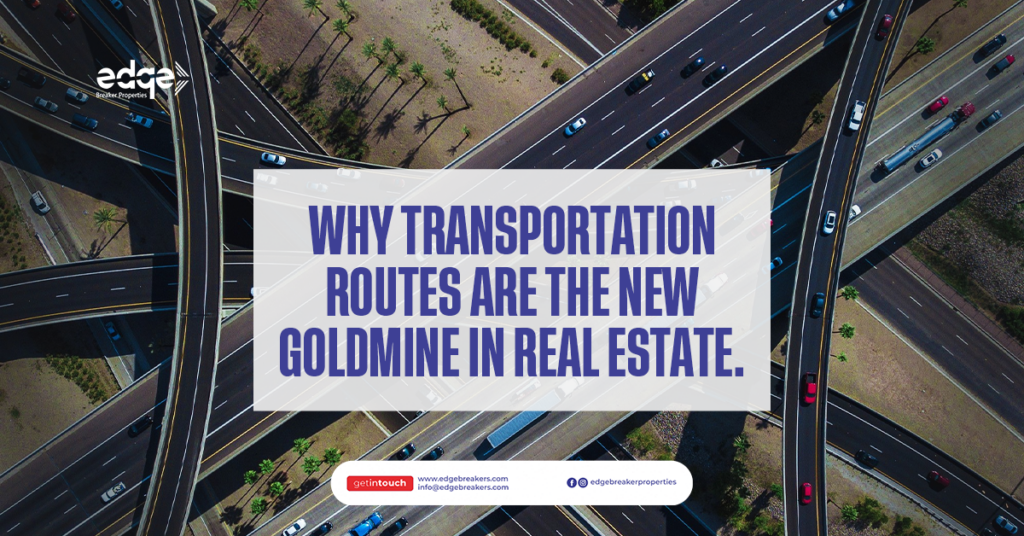
In today’s real estate market, value is no longer defined by location alone, it is defined by connectivity. The most successful investors are no longer just asking “Where is this located?” but they are asking “How easily can people move to and from there?”.
Across rapidly expanding cities like Lagos, transportation routes are emerging as the new goldmine, quietly driving demand, development, and long-term value.
What Do We Mean by Transportation Routes?
Transportation routes refer to infrastructure that enables movement of people and goods, including:
• Major highways and expressways
• Coastal roads and expansion corridors
• Rail lines and metro systems
• Bridges and interchanges
• Access roads connecting key districts
These are not just pathways, they are economic lifelines that shape how cities grow.
Why Transportation Routes Drive Real Estate Value
1. Accessibility Creates Instant Demand
The easier it is to reach a location, the more attractive it becomes.
A new or improved road can transform a “remote” area into a desirable destination almost overnight. Developments along the Lagos Calabar Coastal Road are already gaining attention because they promise faster, smoother connectivity across key parts of the city.
The result:
More people are willing to live, work, and invest there.
2. They Reduce Travel Time and Increase Quality of Life
Time is one of the most valuable resources in urban living. When transportation routes reduce commute time:
• Professionals move closer
• Businesses expand outward
• Residential demand increases
Areas that offer convenience and mobility naturally become more valuable over time.
3. They Open Up New Investment Corridors
Transportation infrastructure does more than connect, it creates new markets. For example, expansion along major routes leading to the Lekki Free Trade Zone has opened up entirely new zones for development. What used to be overlooked is now being repositioned as part of a future growth corridor.
4. They Attract Commercial and Industrial Growth
Where roads go, businesses follow.
Transportation routes support:
• Logistics and warehousing
• Retail expansion
• Industrial development
• Commercial hubs
As economic activity increases, residential demand naturally follows—creating a cycle of growth that continuously pushes value upward.
5. They Signal Government and Private Investment
Large transportation projects are rarely isolated, they are part of a broader development strategy. When you see road expansions, new interchanges, or major connectivity projects, it often means both government and private investors are planning long-term growth in that area.
For investors, this is a powerful signal of future value.
6. Early Access Equals Early Advantage
Transportation routes reward those who move early.
Before full completion:
• Prices are still relatively low
• Demand is just beginning
• Awareness is limited
After completion:
• Demand surges
• Prices adjust quickly
• Opportunities become more competitive
This is why experienced investors focus on positioning ahead of the curve.
Putting Insight Into Action: Where Smart Investors Are Positioning
Understanding that transportation routes drive value is one thing, knowing where to act on it is another.
In today’s market, some of the most strategic opportunities are found in developments positioned along major infrastructure corridors, especially those connected to projects like the Lagos-Calabar coastal road.
For instance:
Edge Palace Estate is directly facing the Lagos-Calabar coastal road, placing it within a high-visibility and high-access corridor where future demand is expected to intensify.
Edge Vintage Estate shares this strategic advantage, aligning with a route that is steadily becoming one of the most important development axes in Lagos.
Edge Place Estate, positioned along a major road, benefits from immediate accessibility, an essential driver of both present value and long-term appreciation.
Edge Tribe Estate offers an early positioning opportunity within a growing environment shaped by surrounding infrastructure expansion.
What makes these locations compelling is not just their current appeal, but their alignment with movement, accessibility, and future urban growth patterns.
What Smart Investors Are Doing Differently
✔ Following Infrastructure, Not Just Popular Locations
They focus on where development is heading, not just where it already exists.
✔ Investing Along Growth Corridors
They position themselves along expanding routes, not just at the endpoints.
✔ Thinking 3–5 Years Ahead
They understand that transportation-driven growth rewards patience and foresight.
✔ Planning Multiple Exit Strategies
From rental income to resale or development, they keep their options open.
Common Mistakes to Avoid
Ignoring future road development plans
Buying too far from actual access points
Waiting until infrastructure is fully completed
Making decisions based on hype instead of strategy
Conclusion
Transportation routes are no longer just supporting infrastructure, they are powerful value drivers. They influence how cities expand, where people choose to live, and where businesses choose to grow.
In markets like Lagos, developments such as the Lagos Coastal Road are redefining investment opportunities and creating new corridors of growth.
Opportunities already exist in strategically positioned developments aligned with these routes, the key is recognizing them early.
Because in real estate today:
Where the road goes, value follows.
Reference
Marketing Department