


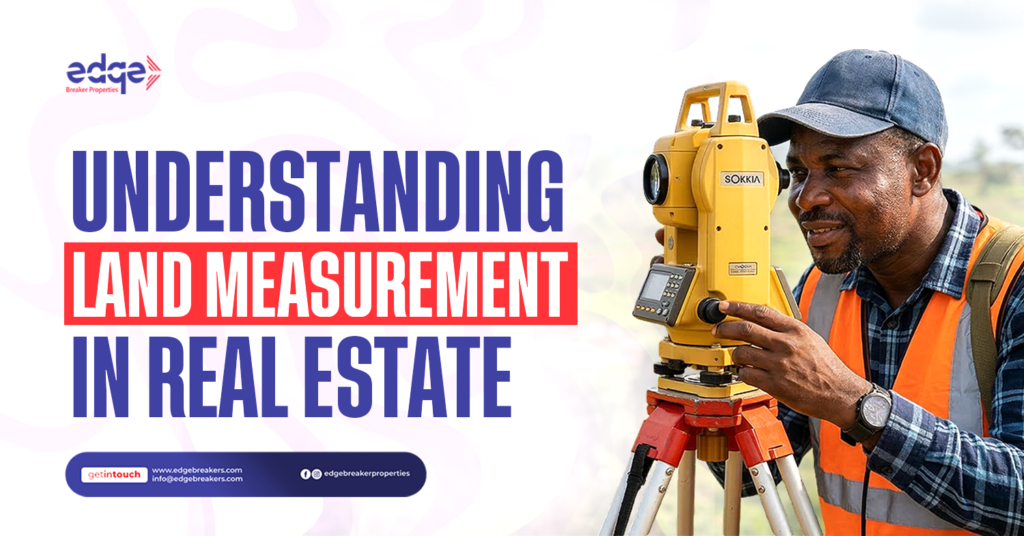
In real estate, one of the most important aspects of buying or investing is understanding how land is measured. Many buyers focus primarily on price and location, but overlooking measurement details can lead to confusion, wrong expectations, or even financial loss. A clear understanding of land measurements helps investors make informed decisions, compare offers properly, and evaluate the true value of a purchase.
Why Land Measurement Matters
Land measurement determines how much space a buyer is acquiring and plays a key role in planning development. Whether the intention is residential construction, commercial use, or long-term investment, the size of the land directly influences its usability and potential value.
For example, two parcels of land may appear similar in price, but if their measurements differ significantly, one may offer better value than the other. Accurate measurement also ensures transparency between developers, agents, and buyers.
Common Land Measurement Units
Different regions use different measurement systems, but in many real estate markets, certain units are commonly used to describe land size.
1. Square Meters (sqm)
Square meters are one of the most widely used measurement units in land documentation and surveys. It measures the total area of land by calculating the length multiplied by the width.
For instance, a piece of land measuring 600 square meters means the total area covers 600 square meters of space.
2. Plot
A plot is a commonly used term in real estate marketing. In many markets, a standard plot is approximately 600 square meters, though this may vary depending on the developer or location. Plots are typically subdivided into smaller portions to make investment more accessible to buyers.
3. Half Plot
A half plot is usually 300 square meters, which is half the size of a standard plot. This option is often attractive to buyers who want to build modest homes or start investing with a smaller budget.
4. Quarter Plot
A quarter plot typically measures 150 square meters. It provides an entry-level opportunity for buyers who want to begin their real estate journey while working within a tighter budget.
5. Acres
An acre is a larger unit of land measurement commonly used for bigger developments or agricultural purposes. One acre is approximately 3600 – 3888 square meters. Investors and developers often purchase land in acres when planning estates, large projects, or commercial developments.
The Role of Survey Plans
A survey plan is an official document prepared by a licensed surveyor that clearly defines the size, boundaries, and location of a parcel of land. It contains technical information such as coordinates, boundary lines, and total land area.
Survey plans are essential because they help verify that the land being sold actually matches the size and boundaries being advertised. They also prevent disputes between neighboring landowners.
How Buyers Can Avoid Measurement Confusion
To ensure clarity when buying land, prospective buyers should always:
• Request the survey plan of the property.
• Confirm the exact measurement in square meters.
• Ask the developer or agent to clearly state the size of the plot being sold.
• Work with qualified professionals, such as surveyors or legal experts, when necessary.
Taking these steps helps buyers avoid misunderstandings and ensures they receive exactly what they are paying for.
Final thought
Understanding land measurements is a fundamental part of real estate investment. It provides clarity on the true size of a property, allows buyers to evaluate value accurately, and ensures that development plans align with the available space.
For anyone considering investing in real estate, gaining a basic knowledge of measurement units such as square meters, plots, and acres is an essential step toward making confident and informed investment decisions.
Reference
Marketing Department